Things to Do in Maseru in July
July weather, activities, events & insider tips
Low Season · Budget Friendly
July Weather in Maseru
Long-run averages for July
62°F (16°C)
High Temp
31°F (0°C)
Low Temp
0.2 inches (5 mm)
Rainfall
54%
Humidity
5
Sunny-Day UV
⚠ Overnight frost hits Maseru and surrounding highlands throughout July, with temperatures regularly reaching 0°C (31°F) or below. Ice forms on highland roads and bridges before dawn, making early mountain pass driving hazardous. Wait for roads to warm. Never attempt passes like the road to Katse Dam before full daylight.
⚠ The extreme diurnal temperature range, often exceeding 15°C (27°F) between midday and midnight, catches unprepared hikers. Start in light layers, face plummeting temperatures by nightfall. Carry warm layers always. Even short walks demand preparation.
Is July Right for You?
Weigh the advantages and considerations before booking
Advantages
- + July is Maseru's driest month by a wide margin, with only 5 mm (0.2 inches) of rainfall on average. The skies over the Maloti range stay sharp and cloudless for days at a stretch. You get unbroken views from Thaba Bosiu. Clear conditions prevail for highland excursions. These same trails turn muddy or fogged in during the wet summer months.
- + Crowds at Maseru's key sites are as thin as they get. The combination of Southern Hemisphere winter and school-term timing means you will likely have the climb up Thaba Bosiu to yourself. The craft stalls at the Basotho Hat sit quiet. The cathedral grounds empty out. Accommodation proves easier to secure on shorter notice. Skip the October independence celebrations. Avoid the December holiday rush entirely.
- + The dry winter light transforms the landscape. Lesotho's highlands lose their summer haze. The sandstone cliffs turn sharp-edged. Brown grasslands catch the winter sun. That sun sits low enough to throw long shadows across the plateau all afternoon. Photographers who time it right get the payoff. Shoot between 4 and 5 PM. The golden hour delivers depth and contrast. Summer's flat overhead light never matches this.
- + July's low humidity, averaging around 54%, makes daytime temperatures comfortable for walking and hiking. The 16°C (62°F) highs feel crisp once you are moving. You avoid the draining summer heat. January pushes Maseru past 28°C (82°F). July wins.
Considerations
- − Nights are properly cold. Maseru sits at roughly 1,600 m (5,249 ft) above sea level. July lows regularly touch 0°C (31°F). Some nights dip below freezing in the small hours. Many guesthouses rely on electric heaters. Central heating remains rare. You will feel the chill between the blankets if power cuts out. This happens more often than advertised. Bring a sleeping bag liner. It is not paranoia. It is foresight.
- − The short winter days compress your sightseeing window. The sun sets before 5:30 PM. It does not rise until after 6:30 AM. Outdoor excursions to Katse Dam need an early start. Maletsunyane Falls demands the same. Avoid driving highland roads in the dark. The mountain passes have no lighting. Frost complicates the surface. Wandering livestock appear suddenly. Narrow shoulders leave no margin. After-dark driving is something to avoid entirely.
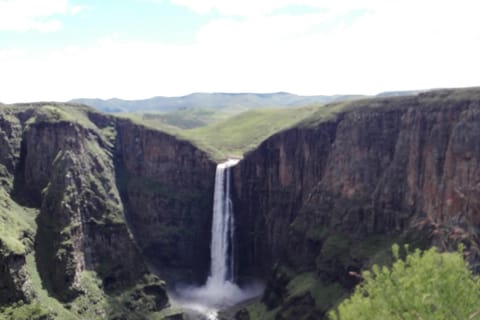
- − Vegetation is dormant. The landscape reads brown and austere. Summer brings lush green. July does not. Wildflower seekers should look elsewhere. Waterfall chasers will find disappointment. Maletsunyane Falls still runs. It flows at a fraction of wet-season force. Alpine meadows above 2,500 m (8,200 ft) resemble high-desert scrub. The tourism brochures show rolling green. July reveals the truth.
Best Activities in July
Top things to do during your visit
Thaba Bosiu Heritage Hike
The flat-topped mountain fortress where King Moshoeshoe I defended the Basotho nation sits about 24 km (15 miles) east of central Maseru. July's dry, stable weather makes it the single best month to climb. The trail runs maybe 45 minutes to the summit at a reasonable pace. The path is rocky. Wet season turns it into a slick mudslide. Ankles have suffered. In July the sandstone is bone-dry. The footing stays reliable. The air clears enough to trace the Caledon River valley to the Free State border. The ruins of Moshoeshoe's original settlement remain visible. Stone walls stand. Grain storage pits dot the plateau. The site carries weight. No museum exhibit replicates this. Bring a windbreaker. The summit catches every gust. Start by 9 AM. Catch the morning light on the eastern cliffs. The interpretive guides at the base know the oral histories. The plaques leave these out. Hire one.
Booking Tip: Arrange transport and a guide through a licensed Maseru-based operator at least a week ahead. July is quiet enough that same-day arrangements sometimes work. A Sesotho-speaking guide transforms the visit. It becomes a history lesson, not just a hike. See current tour options in the booking section below.
Basotho Pony Trekking in the Highlands
Lesotho's hardy mountain ponies are the original all-terrain vehicle of the highlands. Centuries of breeding produced animals that handle steep rocky trails. Horses twice their size would fail here. July's frozen ground and dry conditions make footing far safer than summer mud season. Trails above 2,000 m (6,562 ft) turn into streams when warm. A half-day trek from established highland villages follows ridgelines. Wind is the only sound. Hooves on stone join in. Herd boys whistle across valleys. The ponies are small. They are surefooted to a degree that seems improbable. Watch one pick its way down a slope you would hesitate to walk. Woodsmoke arrives before the rondavels appear. Cold air carries sound cleanly. Conversations echo off cliff faces. Dress in layers. You will warm up climbing. Exposed ridges freeze you. This happens within the same hour.
Booking Tip: Book pony trekking at least 10 days ahead. Multi-day routes with village homestays fill faster. Operators in the Malealea valley know these trails. The Roma valley offers similar expertise. Check the booking widget below. Current availability and guided options appear there.
Katse Dam and Highlands Water Project Excursion
The drive from Maseru to Katse Dam covers roughly 185 km (115 miles) of mountain road that climbs through some of the most dramatic scenery in southern Africa, and July's clear skies make the journey itself half the experience. The road switchbacks through passes above 3,000 m (9,843 ft) where the air thins noticeably and the temperature can sit near freezing even at midday. Katse Dam, one of the highest dams in Africa, holds back a reservoir that gleams an improbable blue against the brown winter hillsides. The engineering is impressive, a double-curvature arch dam set into a gorge that feels too narrow for something that large, and the visitor centre walks you through the Lesotho Highlands Water Project that supplies water to South Africa's Gauteng province. Plan this as a full day or, better, an overnight trip. The drive demands attention, the views demand stops, and rushing it means missing both. The cold at altitude is real: frost lingers in the shadows until mid-morning, and the reservoir surface sometimes carries a thin skin of ice at dawn.
Booking Tip: A guided day trip from Maseru is the practical option unless you are comfortable with mountain driving on roads that have no guardrails and occasional ice patches in the early morning. Book at least two weeks ahead for guided excursions. Current options are listed in the booking section below.
Maseru Cultural and Craft Walking Tour
Maseru's centre is walkable in a way that surprises first-time visitors, and a morning spent on foot between the Basotho Hat craft market and the Cathedral of Our Lady of Victories covers more cultural ground than most guided bus tours manage in a day. The Basotho Hat building, shaped like the conical mokorotlo straw hat that is Lesotho's national symbol, houses craft vendors selling hand-woven Basotho blankets, tapestries from the local weaving cooperatives, and pottery that still carries the red clay smell of the kiln. The blankets are the thing to look for: heavy wool, geometric patterns in deep indigo and ochre, worn by Basotho herders in exactly the weather you are standing in. The cathedral, a few blocks south along Kingsway, is a sandstone-and-glass structure whose interior catches the winter light through tall windows in a way that makes the stone walls glow amber in the late morning. Walk Kingsway itself for the street-level feel of Maseru: minibus taxis idling with their sliding doors open, the smell of grilled maize from pavement vendors, and the particular hum of a capital city that is also, a border town with South Africa's Ladybrand visible across the Caledon River.
Booking Tip: Walking tours can be arranged through Maseru-based cultural operators, though July's manageable distances and low crowds make self-guided exploration viable. Allow a full morning. See the booking section below for guided heritage tour options.
Maletsunyane Falls Day Trip from Maseru
Maletsunyane Falls drops 192 m (630 ft) in a single plunge near the town of Semonkong, about 130 km (81 miles) southeast of Maseru, making it one of the highest single-drop waterfalls in southern Africa. July's reduced water flow means the falls lack the thundering volume of the summer months. But there is a trade-off that works in your favour: the spray is lighter, the viewpoints are dry and safe to approach, and on a clear winter day the falling water catches the low sun and throws rainbows across the basalt gorge walls. The drive to Semonkong passes through open grassland dotted with shepherds in their blankets and conical hats, and the landscape feels vast in a way that photographs struggle to capture. The air at the falls is noticeably colder than Maseru, often sitting below 10°C (50°F) even at midday, and the mist from even the reduced flow will find any gap in your layers. The gorge itself smells of wet rock and the iron-rich earth that stains everything it touches a deep rust colour.
Booking Tip: This is a long day trip or better as an overnight. Book guided transport at least a week ahead. The road is paved most of the way but the final stretch requires a vehicle with decent clearance. Check the booking section below for current excursion packages.
Where to Stay in Maseru in July
Hand-picked hotels across price tiers for July travellers.
Public Holidays in July
Dates that affect opening hours, transport and crowds
King Letsie III's Birthday
Observed nationwide as a public holiday.
King Letsie III's Birthday
Observed nationwide as a public holiday.
Packing Checklist
Bookmark this page — your progress is saved between visits
Need the full list with shopping links?
Climate-specific gear, brand recommendations, and what to leave at home.
View Maseru Packing List →Essential Tips
Insider knowledge and common pitfalls to avoid
Insider Knowledge
The Basotho blanket is not a souvenir, it is winter survival gear, and buying one from the vendors at the Basotho Hat market or along Kingsway is one of the smartest things you can do on arrival. The heavyweight wool blankets with the cabbage or corn-cob pattern (known as Seanamarena designs) are what every herder and villager in the highlands wraps around their shoulders from May through August. Wear it over your jacket on a cold morning and you will understand immediately why these blankets have been currency, dowry, and status symbol in Lesotho for over a century. They are not cheap. But they are worth it, and they last decades.
Maseru's minibus taxi system runs along fixed routes from the central rank near the Basotho Hat, and while it looks chaotic from the outside, asking any driver for the route to your destination usually gets you pointed to the right vehicle within a minute. The taxis leave when full, not on a schedule, and mornings between 7 and 8 AM are the busiest departure window. A Sesotho greeting, 'Lumela' for one person or 'Lumelang' for a group, before asking your question earns you noticeably warmer help than jumping straight to English.
The South African rand is accepted everywhere in Maseru alongside the Lesotho loti, at a one-to-one fixed exchange rate. This means you do not need to change currency if you are coming from South Africa, and ATMs in Maseru dispense both. Mind you, the reverse is not true: try spending maloti in Bloemfontein and you will get blank stares. Carry smaller denominations for street vendors and minibus fares, as making change for large notes can stall a transaction for longer than feels comfortable.
July evenings in Maseru shut down earlier than visitors expect. By 7 PM, most of the city's commercial life has wound down, and by 9 PM, outside of the Lesotho Sun complex and a handful of spots along Kingsway, the streets are quiet and dark. This is not a safety warning so much as a practical one: plan your evening eating and drinking for early, or accept that your lodge or guesthouse kitchen is where dinner happens. The upside is that July's cold, clear nights produce some of the best stargazing you will find near any capital city in the world. Maseru's limited light pollution and high altitude put the Southern Hemisphere constellations, including the Magellanic Clouds, right overhead.
Avoid These Mistakes
Underestimating the cold. Visitors who check the daytime high of 16°C (62°F) and pack accordingly are blindsided by how fast the temperature crashes after sunset. The 31-degree swing between daytime and nighttime temperatures is not gradual. It drops sharply in the hour after the sun sets, and by 8 PM you are dealing with near-freezing conditions. Pack for winter, not for a cool autumn day.
Trying to day-trip everything from Maseru. The highland attractions, Katse Dam, Semonkong, Maletsunyane Falls, are each a 3-to-4-hour drive on mountain roads that demand full attention and daylight. Cramming Katse Dam into a day trip from Maseru means spending 7 hours driving and 90 minutes at the dam, which inverts the ratio of effort to reward. Stay overnight near the sites you want to see, or accept that each one is a full dedicated day.
Assuming border crossing between Maseru and Ladybrand, South Africa is quick. The Maseru Bridge border post, which connects the city directly to the Free State, can back up significantly during morning and evening commuter hours, and the process involves passport control on both sides. Allow at least 45 minutes to an hour for crossing during busy periods, and carry your passport even if you are just thinking about popping across for a meal. The Caledonspoort crossing to the north is sometimes faster but adds driving distance.
Ready to plan your trip to Maseru?
Now that you've got the research covered, here's where to go next.
Book Experiences in Maseru
Top-rated things to do in Maseru this July

Explore More Activities in Maseru
Didn't see anything interesting yet?
Browse Viator's full catalog of tours, day trips, food experiences, and private guides in Maseru.
See All Maseru Tours on Viator